

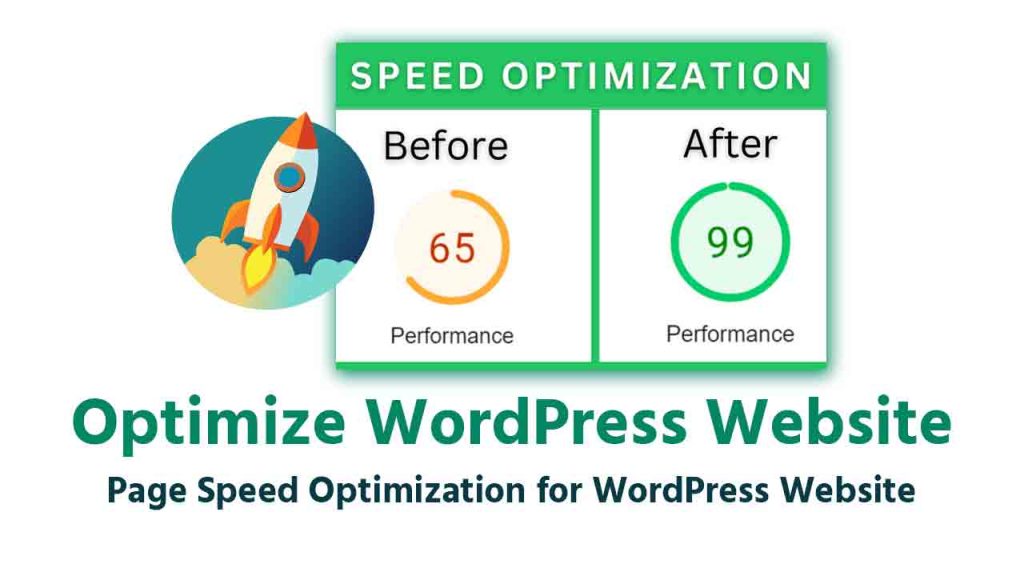






Optimize WordPress Website Speed for responsive. Expeditious website performance is paramount for user satisfaction and search engine optimization (SEO). A nimble WordPress site not only enhances your rankings but also captivates visitors. Here’s a thorough guide to augmenting your WordPress site’s velocity.
Select a Trustworthy Hosting Provider
The caliber of your hosting provider significantly influences your site’s alacrity. Choose a distinguished hosting service renowned for stellar performance. While shared hosting might be economical, it often culminates in lethargic load times. Opt for Virtual Private Server (VPS) or dedicated hosting for superior speed.
Utilize a Lightweight Theme
Themes can markedly impact your site’s efficiency. Opt for a lightweight, meticulously coded theme. Steer clear of themes burdened with superfluous features and functionalities. Typically, minimalist and pristine themes exhibit better performance.
Refine Image Sizes
Hefty images can decelerate your site. Employ image optimization plugins like Smush or ShortPixel to compress images sans quality degradation. Consistently use the appropriate image format and dimensions tailored to your requirements.
Activate Caching
Caching can profoundly expedite your website’s loading time. Implement caching plugins such as W3 Total Cache, LiteSpeed Cache or WP Super Cache. These plugins store a static version of your site, alleviating the server’s workload.
Minify CSS, JavaScript, and HTML
Minification entails removing extraneous characters from your site’s code, which can accelerate load times. Plugins like Autoptimize assist in minifying your CSS, JavaScript, and HTML files.
Implement a Content Delivery Network (CDN)
A CDN disseminates your site’s content across numerous servers globally, diminishing the distance between your server and the user, thus enhancing load times. Noteworthy CDNs include Cloudflare and MaxCDN.
Streamline Your Database
Over time, your WordPress database can become cluttered with redundant data. Use plugins like WP-Optimize to purge your database. This can bolster your site’s performance and speed.
Curtail HTTP Requests
Each element on your site (images, scripts, stylesheets) necessitates an HTTP request. Ameliorate these requests by amalgamating files and eliminating nonessential elements. This can substantially enhance your site’s speed.
Disable Superfluous Plugins
An excess of plugins can impede your site’s performance. Deactivate and eradicate any plugins you deem unnecessary. Retain only indispensable plugins and routinely update them to ensure optimal performance.
Enable GZIP Compression
GZIP compression can diminish the size of your files and expedite load times. Most caching plugins proffer an option to activate GZIP compression. Alternatively, you can enable it via your site’s .htaccess file.
Monitor Your Site’s Performance
Consistently surveil your site’s speed using tools like Google PageSpeed Insights or GTmetrix. These tools furnish insights and recommendations for further optimizations.
Conclusion
Optimize WordPress Website Speed and feelings cools. Optimizing your WordPress website’s speed is vital for enhanced user experience and elevated SEO rankings. Implement these strategies to ensure your site operates swiftly and efficiently. A more agile site can lead to heightened engagement and improved search engine performance.